Virgil: The Epic Poet
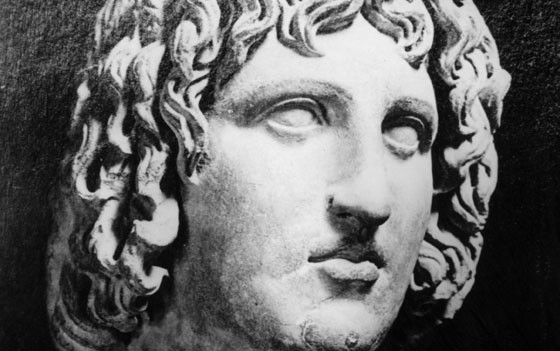
In its time of rebirth, the world’s greatest empire needed a source of inspiration. The Romans and the rest of the world looked to Virgil, one of the greatest poets in human history, to provide this new hope. Virgil’s poems are a great work of art and are intriguing to both academia and entertainment. Virgil, the great Roman poet is considered to be the greatest of his time and wrote three major works that were the Eclogues, the Georgicsand the epic Aeneid. These works were a source of inspiration and great craftsmanship in both storytelling and poetry. His writings were so admirable, that another epic poet, Dante, in his own epics, used Virgil as the guide for the main character (Hollander). The works of the Roman poet Virgil were deeply influenced by his life and environment which can be seen through the influence of his early life, his Roman pride, and his respect for the Greek poet Homer.
Firstly, one of the biggest influences on the Virgil’s works was the interesting life he led, and more specifically his early life. Virgil’s parents were an interesting pair; his father, whose name is unknown, was either a day laborer or a potter but his mother, Maggia Pollia’s family was part of the lower gentry, respectable but not particularly wealthy. It is commonly believed that the Maggia’s father Magius was the employer of Virgil’s father and took a liking to the worker. As a reward, he gave to him his daughter’s hand in marriage. Publius Virgilius Maro or Virgil was born on October 15th, 70 BCE in Andes, a countrified region near the town of Mantua, in Cisalpine Gaul (now Italy) and lived until 19 BCE. At the time of his birth, Virgil was not a true Roman citizen because Mantua did not receive citizenship rights until 49 BCE, twenty-one years into Virgil’s life. The young Virgil lived in an area where farmland was bountiful and peaceful. However, outside the walls of isolation that surrounded Cisalpine Gaul, turmoil was also bountiful. Civil War raged between the first triumvirate, which consisted of Julius Caesar, Gnaius Pompeius and Marcus Licinius Crassus (“Virgil” Poetryfoundation.org; Robert).
Virgil’s father had high expectations for his son and with the small wealth acquired from marrying Maggia Pollia, he was able to pay for a proper education for Virgil (Robert). Virgil went to both Rome and Cremona at the age of five where he studied many disciplines including medicine, forensics, philosophy and astronomy (“Virgil” Poetryfoundation.org). Virgil took an immediate liking to both forensics and philosophy. However, his education lacked the deeper philosophical content of Greek education, which Virgil envied, so Virgil pursued forensics. After finishing his primary and secondary educations, Virgil stayed in Rome to receive his higher education. Virgil pursued forensics, but was not very talented at the art of rhetoric. At this time, he met a mentor by the name Epidius. From him he learned Greek literature and Epicurean philosophy. Later in Virgil’s life, these disciplines will play a big role in influencing his works..
After completing his tertiary education, Virgil traveled back to the Andes around 44 BCE and began to live with his family (Robert). It was about this time that the civil war ended between the first triumvirates with Caesar being the victor. The empire looked for a brighter future but then, on the Ides of March (March 15) of 44 BCE, the empire turned once again to chaos; the Roman senate assassinated Caesar (Assassination of Julius Caesar). This event led to the creation of the second triumvirate, which consisted of Mark Antony, Octavian (later to be known as Augustus), and Lepidus to wage war on the conspirators that had murdered Caesar. The war drew to a close by 41 BCE with the triumvirs as the victors (Phillips and Axelrod). Although, Mark Antony won the war, he faced many losses and was not able to pay his soldiers their due wages. Many of these soldiers, angry at not receiving what they were promised, took out their anger by looting farmers in Northern Italy, where Virgil’s family lived. They abducted farmlands from their owners in revenge for not receiving the farmland they were promised. Virgil’s farm was on the brink of takeover when Roman commissioners Gallus, Varus and Pollio, friends of Virgil from his time in Rome, suggested that Virgil’s family should petition the new leader Octavian for help. This action saved the farm for a few years. The benevolent actions of these three men were forever immortalized in Virgil’s Eclogues, which Virgil started to write in this period of time.
It was 43 BCE and for the next six years, Virgil settled into his hometown and worked on his family’s farm. For these six years from 43–37 BCE, Virgil wrote his set of ten Eclogues, also known as Bucolics (Robert). These set of ten poems were deeply influenced by Virgil’s life so far. It was centered on a rural theme based on his surroundings at the time of the writing. The characters of nearly all the epilogues were shepherds and simple people, those of which he was acquainted with. He used the skills he learned from his mentors and borrowed heavily from the Greeks. They were modeled on the Idylls of Theocritus, used a Callimachean doctrine of poetic fineness, and imitated the pastoral style of Hesiod. Theocritus, Hesiod and Callimachus were three of the many great Greek poets that Virgil looked up to during his education and saw as role models and honored them by using their teachings in his own works (Putnam 9). The first Eclogue, showed Virgil’s thankfulness to the actions of Gallus, Varus, and Pollio, the Roman Commissioners that saved his family’s land (Robert). The first Eclogueconcerns two friends Maliboeus and Tityrus in the time following Julius Caesar’s assassination. Both are about to loose their lands because of a political deal. Maliboeus gives in and is about to move to either Britain or Africa. Tityrus, however escapes the ordeal by going to Rome and begging for his land (Virgil, “Aeneid”). It is quite clear that this Eclogue was influenced by both the social times of Virgil’s personal experience of almost losing his land. Virgil tries to make his readers love Rome by showing how benevolent they are. This Roman kindness is also shown when Tityrus offers Maliboeus to stay with him:
“Yet here, this night, you might repose with me,
On green leaves pillowed: apples ripe have I,
Soft chestnuts, and of curdled milk enow.
And, see, the farm-roof chimneys smoke afar,
And from the hills the shadows lengthening fall!”
(Virgil, “Eclogue 1” 109–113).
Virgil’s pride for his nation is clearly demonstrated in the lines,
“The city, Meliboeus, they call Rome,
I, simpleton, deemed like this town of ours…
Comparing small with great; but this as far
Above all other cities rears her head
As cypress above pliant osier towers,”
while Tityrus praises Rome for saving his farm. While Tityrus is telling his friend Maliboeus about the wonders he saw in Rome, Virgil subtly puts a notion of the grandeur of Rome in the readers mind (Virgil, “Eclogue 1” 31–38). He also uses the Eclogue, written at a time when Virgil was living on the farm, to show the life of a Roman peasant, his life so far. This *Eclogue *shows an interesting point of merging between Rome’s two pre-Christian religions. It does not display only Saturn’s facile primitivism, the old way of the Roman people, a lifestyle based around pastoralism but also displays Jupiter’s idealism, a belief in the concept of social freedom (Putnam 23). This Eclogue, as seen in the lines,
“Has civil discord brought our hapless folk! / For such as these, then, were our furrows sown,”along with Eclogue 9 warn that reality is not ideal and that the worst can happen
(Virgil, “Eclogue 1”).
After this 6-year period of peace, in 37 BCE, the former soldiers of Antony once again attacked and this time succeeded. Virgil and his father were forced to flee south. For some time, the father and son resided with Virgil’s old tutor Siro, then in a villa near Nola, and finally ended in Naples. It was here that Virgil resided for the next 8 years, from 37–29 BCE, and composed his four-book poem known as the *Georgics (*Robert). The *Georgics *were all related to farming and the natural world. They all glorified the hard lives of farmers and gave deep insight into humanity, using philosophical ideas he learned from fellows such as Hesiod and Lucretius. Virgil used bees to signify a perfect race for their abilities to be partially human yet divine, communally minded, instinctively aggressive, ignorant of love, eternal in some eyes, but still equally the prey of death. Also it is seen that as early as the writings of the third and fourth Georgics, Virgil already demonstrated great praise for Octavian, even comparing him to Jupiter. This was undoubtedly due to his experiences from his younger life during the earlier civil wars, when Octavian helped spare his family’s lands. The works of Virgil were heavily influenced by his early life in both his education and experiences.
Secondly, another one of the greatest influences on the works of Virgil was his pride for his nation. During Virgil’s life, after the third civil war, the Roman Empire saw the greatest period of expansion it has ever seen. This time was known as the Pax Romana. During this time, it was at its highest peak of economic, social, and political power. During this time, much advancement in religion was made. More temples were created and people found a renewed belief in these deities (“Augustan Rule”). This renewed faith allowed Virgil to incorporate a divine element in his epic, the *Aeneid.*Virgil saw the *Aeneid *as a chance to show off to the world how great Rome was. It was more important then than ever before. These ideas however were not Virgil’s alone. Octavian, who now styled himself as Augustus, was now the indisputable leader of the empire. He turned the empire from a republic to an empire but not everyone was happy with the new government. Augustus needed to prove himself to the world. He had high hopes and visions for Rome; he envisioned it as a sophisticated, urbanized empire. To do this, he first had to prove himself as a leader and bring the people together after the past century of war. Augustus realized that he needed a national epic, one that would people be proud to be Roman, and Augustus thought no one was more qualified than Virgil. The two went along quite well, because of their common insistence for perfection. This influenced his works because neither Virgil nor Augustus would take anything that wasn’t perfect, which forced Virgil to spend painstakingly long anounts of ime to edit single lines to make them flawless (Robert).
Finally, the third major influence on the works of Virgil is the works of the Greek poet Homer, author of the *Iliad *and the *Odyssey. *Virgil saw Homer as a role model but at the same time, he tried to outdo him. During Virgil’s education, while studying literature, he closely studied both of Homer’s works. Virgil’s respect for the poet can be seen through the *Aeneid’s *obvious imitation of both the *Iliad *and *Odyssey (*Adler 3). The *Aeneid *uses many of the same characters as Homer’s works and literally picks up where the Iliadended (Robert). There are many similarities between the plot of the Homeric epics and the *Aeneid. *In the Aeneid, the climax is when Aeneas kills Turnus in revenge for Turnus killing his dear friend Pallas. This theme of revengeful climax is not new; Achilles killed Hector in revenge for the death of his friend Patroclus and Odysseus killed the suitors in revenge for them attempting to steal his kingdom and wife (findthedata.org). Despite Virgil’s respect, a sense of rivalry between the two epic poets is definitely seen. Virgil tries to outdo both of Homer’s great epics in one of his own. His epic contains the wandering hero of the *Odyssey *in the first six books with the warring hero of the *Iliad *in the last six. Using this context, when scholars study Virgil vs. Homer, they examine the differences between Homer’s duality and Virgil’s singularity (Adler 5). One of the events that many scholars use to compare Homer and Virgil are the underworld adventures of Odysseus and Aeneas. Carlos Parada, a researcher in Greek and Roman mythology created a map to provide a visual guide in comparing the journeys of the two heroes. For one, Aeneas’ journey shows Virgil’s respect for Homer by making his own character go on a similar journey as Homer’s character, Odysseus. Both heroes had guides to help them in their journey. Odysseus had Circe in the mortal world and Tiresias in the underworld. Aeneas had his own guides, Sybll of Cumae among the living and Anchises amongst the dead.
Virgil’s attempts to outdo Homer were seen in the obstacles that the heroes had to face on their respective journeys. Odysseus had to face only the Grove of Persephone and the Rock of Unburied Souls. When Aeneas had his chance to venture into the land of the undead, he had to face far more obstacles including the Elm of False Dreams, the Vale of Mourning and the Plain of Judgment. Another difference between the two journeys is that in the underworld, Odysseus was mentally challenged by having to face people from his life. Aeneas on the other hand had to physically fight his way past dead souls, strength being a characteristic valued by Romans over intellectual and mental abilities (Parada). Using these comparisons, it is possible to examine the respectful yet jealousy-filled relationship between these two epic poets, both masters of literature of their own eras.
When examining the Aeneid, what is often considered to be Virgil’s greatest works, we see the effects of all three influences. For one, Virgil’s early life is demonstrated through the influences of his education and the insistence for perfection drilled into him at an early age (Putnam 11). Since he died before the *Aeneid *was ever published, he wanted it to be burned because he did not have a chance to edit it (Robert). Virgil shows his love and pride in his nation when within the very first few lines, of the Aeneid, he jumps into praising Rome
“The Latian realm, and built the destin’d town;
His banish’d gods restor’d to rites divine,
And settled sure succession in his line,
From whence the race of Alban fathers come,
And the long glories of majestic Rome,”
(Virgil, “Aeneid” 6–10).
Within these five lines, he claims Rome to be the destined town and claims all Romans to be noble because of their noble and royal bloodlines including those of both Troy and their Alban (Latinian) ancestors (Putnam 12). Virgil’s most clever way of exemplifying Rome is by using events in the story to compliment those in real life. He does this by making the Antagonist be Juno. Juno (Greeks) hurts Aeneas (Trojans) during the Trojan War, so now in the future, Aeneas (Romans) get revenge by conquering Juno (Greeks). This characterization exemplified and displayed Rome’s successful conquest of Greece. The same concept is also seen when Juno (Carthage) hurts Aeneas, so in revenge, Aeneas (Romans) hurt Juno (Carthage) by burning Carthage in the Punic Wars:
“That times to come should see the Trojan race
Her Carthage ruin, and her tow’rs deface,”
(Virgil, “Aeneid” 29–30)
This was used to boast and show off Rome’s greatest military victory of the time, the victory of the Punic Wars.
The very first line of the Aeneid,
“Arma virumque cano,”shows Virgil’s imitation and merging of the *Iliad *and *Odyssey (Virgil, “Aeneid” 1).
*Arma stands for the Achilles and *Iliad *while Virumque stands for Odysseus and the *Odyssey (*Adler 3). The merging of the *Iliad *and the Odyssey can also be seen in the lines,
“Expell’d and exil’d, left the Trojan shore.
Long labors, both by sea and land, he bore,
And in the doubtful war, before he won,”
(Virgil, “Aeneid” 3–5).
When Aeneas is expelled from the Trojan shore and faces long labors, Virgil pays a direct homage to the *Odyssey. *Then during the doubtful war, the reference to the *Iliad *is obvious. Virgil’s competition with Homer is also seen when Virgil, noticing that Homer invokes the muse, takes the task upon himself as seen in the first line of the epic,
“Arms, and the man I sing…” (Virgil, “Aeneid” 1).
By claiming that he sings the epic, he attempts to show his superiority over Homer who had to invoke the muse to tell his epics. Another piece of evidence that supports the idea that Virgil tried to outdo Homer is that Homer speaks about mortal anger, Achilles’, in the Iliad, so Virgil tries to top that by focusing on divine anger, Juno’s (Adler 3–7). This is seen through the lines
“What goddess was provok’d, and whence her hate, / For what offense the Queen of Heav’n began,” (Virgil, “Aeneid” 12)
The *Aeneid *is the best example of how all three of Virgil’s influences come together into his ultimate masterpiece.
In conclusion, Virgil, one of histories greatest poets had been influenced by his early life, his Roman pride, and his respect for the Greek poet Homer. This deduction is easily summed up by the quote, “Vergil, through the pastorals of his youth and the epic of his maturity, created verse which, while Greek in its inspiration, specifically reflects the sophistication of Augustan Rome,” (Robert). These three influences affected his work and made him the great poet he is. Virgil was just the source of inspiration that the world desperately needed at its time of discord and rebirth. He brought the people together and looked to the future by a looking to the past. His three works, the Eclogues, the Georgics, and the *Aeneid *continue to fascinate readers today, whether it be in academia or for entertainment. Virgil truly was the greatest Roman poet.
Sources
Adler, Eve. “The Theme of the Aeneid.” *Vergil’s Empire: Political Thought in the Aeneid. *Lanham: Rowman & Littlefield, 2003. 3–7. Print.
“Augustan Rule (27 B.C.–14 A.D.).” *Heilbrunn Timeline of Art History. *The Metropolitan Museum of Art, Oct. 2000. Web. 3 Mar. 2012.
Hollander, Robert. *DANTE’S VIRGIL: A LIGHT THAT FAILED. *Rep. Brown University, Spring 1989. Web. 23 Mar. 2012.
“Julius Caesar, Assassination of.” *Ancient and Medieval History Online. *Facts On File News Services. Web. 4 Mar. 2012.
Noremac, Thor. “Virgil’s Eclogues.” *Writinghood. 14 *Feb. 2011. Web.
Robert, Foreman J. “Vergil.” *Literary Reference Center. *EBSCO, Jan. 2009. Web. 22 Feb. 2012.
Parada, Carlos. “Map of the Underworld.” Map. *Mythological Maps. *Jonsered: P. Åströms Förlag, 1993. 6. *Maicar. *Web. 2 Mar. 2012.
Phillips, Charles, and Alan Axelrod. “Wars of the Second Triumvirate.”*Encyclopedia of Wars. *Vol. 2. New York: Facts on File, 2005. *Ancient and Medieval History Online. *Web. 4 Mar. 2012.
Putnam, Michael C. J. “The Virgilian Achievement.” *Virgil’s Aeneid: Interpretation and Influence. *Chapel Hill: University of North Carolina, 1995. 9–23. Print.
“The Aeneid by Virgil vs The Iliad by Homer vs The Odyssey by Homer.”*Www.findthedata.org. *Web. 03 Mar. 2012.
“The Aeneid.” *The Internet Classics Archive. *Print. *The Aeneid. *By Virgil. Trans. John Dryden.
Virgil. “Eclogue 1.” *The Eclogues. The Internet Classics Archive. *Web. 15 Mar. 2012.
“Virgil.” *Poetry Foundation. *Poetry Foundation. Web. 3 Mar. 2012.